What was Phrenology?

The word Phrenology derived from the two Greek words φρήν and λόγος meaning “mind” and “discourse” or “knowledge”. It was considered a science, now a pseudoscience, which tried to explain how the mind works. It prompted one of the first public discussions of the idea that God did not control the mind, and although almost none of it was correct, it was still a huge first step towards neuroscience today.
The brain was divided into two Orders; Affective and Intellectual.
-The Affective Order included our most basic faculties, ones that we feel instinctively without learning, eg. the instinct to love.
-The Intellectual Order included faculties gained from knowledge of our surroundings, eg, being musically talented.
Perceptive
22. Individuality – The concept of being.
23. Configuration – The concept of figures.
24. Size – The concept of dimensions.
25. Weight – The concept of how heavy something is.
26. Colouring – The concept of different shades.
27. Locality – The concept of remembering situations.
28. Calculation – The concept of numbers and plurality.
29. Order – The concept of method.
-
30.Eventuality- The concept of knowledge of events.
31. Time – The concept of the duration of time.
32. Tune – The concept of apprehending sound.
33. Language – The concept of artificial signs.
Sentiments
10. Self esteem – The sentiment producing pride.
11. Love of approbation – The sentiment producing attentiveness of opinions of yourself by others.
12. Cautiousness – The sentiment producing anxiety.
13. Benevolence – The sentiment producing kindness.
14. Reverence – The sentiment producing respectfulness.
15. Firmness – The sentiment producing will power.
16. Conscientiousness – The sentiment producing the feeling of duty.
17. Hope – The sentiment producing belief.
18. Marvellousness – The sentiment producing wonder.
19. Ideality – The sentiment producing enthusiasm.
20. Mirthfulness – The sentiment producing wit.
21. Imitation – The sentiment producing the ability to copy.
Instincts
1. Amativeness – The instinct to love.
2. Philoprogressiveness – The instinct to take care of your offspring.
3. Inhabitiveness – Determines where you dwell.
4. Adhesiveness – The instinct to attach yourself to beings around you.
5. Combativeness – The instinct to fight.
6. Destructiveness – The instinct to kill.
6a. Alimentativeness – The instinct to eat.
7. Secretiveness – The instinct to conceal.
8. Acquisitiveness – The instinct to gather together.
9. Constructiveness – The instinct to build.
Reflective
34. Comparison – The ability to identify differences.
35. Casuality – The ability to understand connections between causes and effects.
There were four main principles that form the basis of phrenology.
-
1.The brain is the organ of the mind
-
2.The mind is split up into faculties, each controlling a different part of your personality, and each localized to a different organ of the brain.
-
3.The size of the organ is representative of the energy of the faculty.
-
4.These bumps are apparent on the skull and so by feeling the head and noting size differences in certain places you can obtain information on the subjects personality.
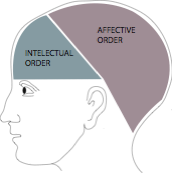
Both of these Orders were then subdivided into Genera.
-The Affective Order was split into two Genera; Instincts and Sentiments.
Instincts (or Animal Propensities) were considered the most primitive faculties we have; common in both humans and animals.
Sentiments were considered the basic faculties that incorporate emotion; common in humans.
-The Intellectual Order was split into three Genera; Perceptive, Reflective and External Senses. It was thought that:
The Perceptive faculties help us understand the qualities of external objects.
The Reflective faculties are what we call reason, and they help us judge the meaning behind things.
External Senses are the instruments we use for our internal faculties to work.
Each Genus consists of faculties responsible for different parts of the personality.
External Senses
Feeling
Taste
Smell
Hearing
Sight
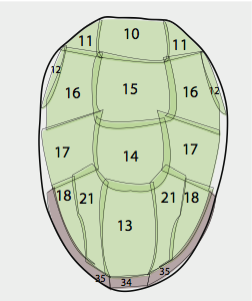
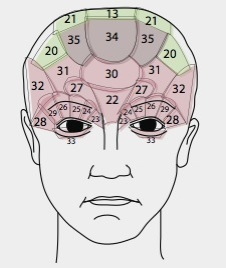
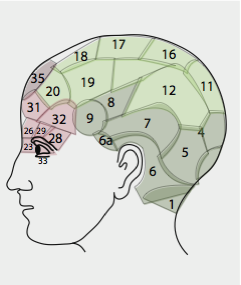
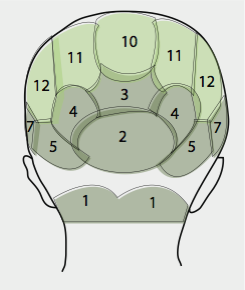
Locations of the Faculties of the Mind
Dividing up the Brain



To find out how the brain really develops: